Mounting a TV Over a Fireplace: Heat, Height and When to Say No
It's the most requested TV location in the valley and the one we talk the most people out of — or, more often, talk them into doing differently than they'd planned. The fireplace wall is usually the architectural focal point, there's often nowhere else the furniture points, and it's frequently the only wall without a window. Those are real reasons. Here's what to check before you commit to it.
The Heat Question, Answered Properly
Most consumer televisions specify a maximum ambient operating temperature around 104°F (40°C). Above that, you're not risking an immediate failure so much as steadily cooking the panel's electronics and shortening its life — the failure shows up in year three, not week one, which is why the connection often goes unnoticed.
Don't guess at this. Measure it. Run the fireplace the way you actually use it — a full hour, not five minutes — then hold an inexpensive infrared thermometer where the bottom edge of the TV will sit. Under about 100°F, you're fine. Between 100 and 110, mitigation is needed. Consistently above that, the answer is a different wall or a different fireplace configuration.
Which fireplaces are worse
- Wood-burning with a shallow surround — hottest, and the heat plume rises directly up the face.
- Modern flush linear gas fireplaces — increasingly common in newer Summerlin West and Inspirada builds, and often worse than a traditional one for this purpose, because there's no projecting mantel to deflect the plume and the units are designed to throw heat outward into the room.
- Traditional gas insert with a deep mantel — usually the most TV-friendly. A mantel that projects six inches or more redirects rising heat away from the wall above it.
- Decorative or rarely used fireplaces — in Las Vegas plenty of fireplaces get lit twice a year, which changes the risk calculation entirely. Be honest about your actual usage.
Mitigations that work
- A projecting mantel shelf, or adding a heat deflector shelf if there isn't one
- A full-motion mount that holds the TV several inches off the wall, letting air move behind it
- Not enclosing the TV in a tight recess above a heat source — recessed niches trap heat exactly where you don't want it
- Keeping the fireplace's own vent path clear
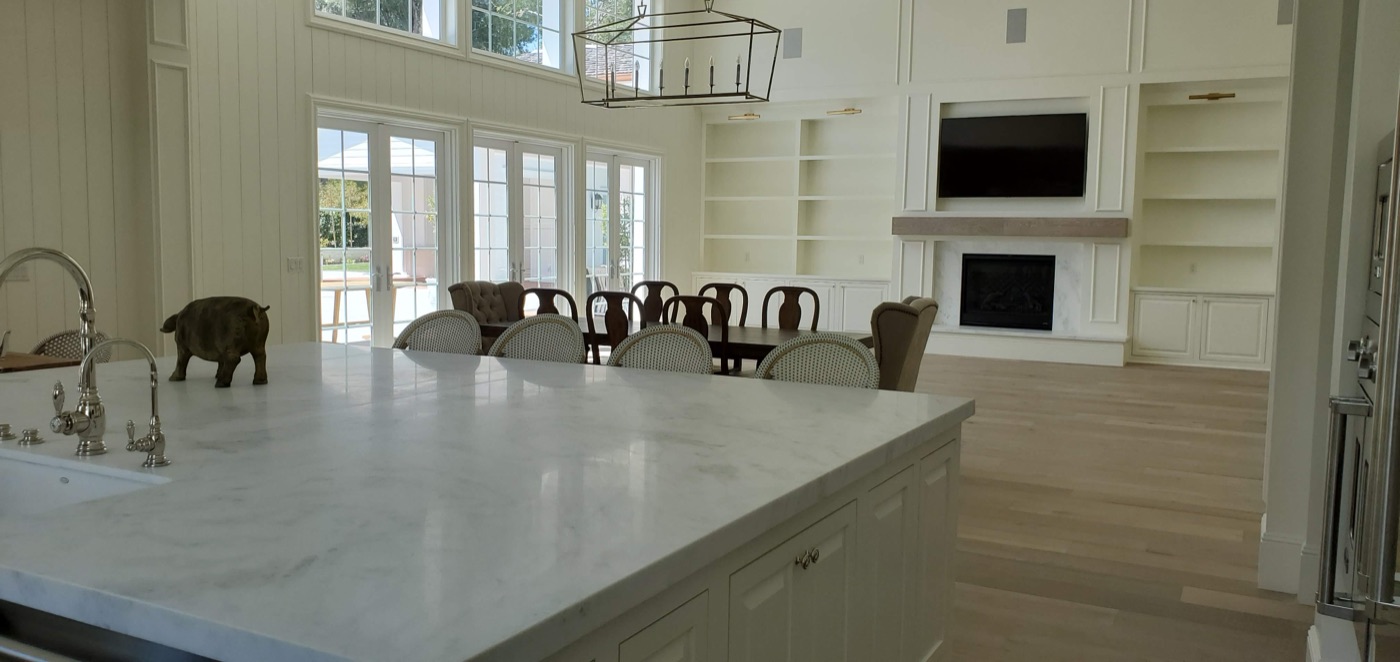
The Height Problem Is the Bigger One
Heat gets the attention; height causes more complaints. A mantel typically sits 48–54 inches from the floor, which puts the bottom of the TV there and screen center somewhere between 65 and 80 inches. Seated eye level is around 42. That's a viewing angle most people find tiring within an hour, and it gets worse the closer your seating is to the wall.
What actually helps:
- Downward tilt is essential, not optional. A tilting or full-motion mount aims the panel at your eyes, which also fixes the off-axis contrast and color shift you get looking at an LCD from below.
- A pull-down mantel mount parks the TV flush above the fireplace and drops it to eye level for viewing. It's the best answer to this problem that exists, and worth knowing about because most homeowners have never seen one.
- Move the seating back. Distance flattens the angle. Six feet from a high-mounted TV is punishing; twelve feet is tolerable.
- Choose the screen size for the height. Counterintuitively, a slightly smaller TV mounted lower often beats a bigger one mounted high.
The full geometry is in our TV height guide.
Getting the Cables There
A fireplace wall rarely has a straight cavity from the TV down to an outlet — there's a firebox, a chase, and framing in the way. Realistic paths: down one side of the surround inside the framed wall beside it, through the chase if it's accessible and clear of flue and gas, or into a cabinet or built-in flanking the fireplace. On a solid stone or full-masonry surround, in-wall concealment may not be possible at all and a color-matched raceway is the honest answer. See wire concealment options.
One safety point worth stating plainly: nothing gets routed through a flue, a vent, or a space that carries combustion products. Ever.
When the Answer Should Be a Different Wall
Consider elsewhere if the measured temperature above the firebox exceeds about 110°F in normal use; if your seating is closer than about eight feet and the mantel is high; if the surround is solid masonry with no viable cable path and a raceway isn't acceptable to you; or if there's a perfectly good adjacent wall and the furniture could be turned. In a lot of Las Vegas great rooms, that last one is the quiet winner — the fireplace wall is habit, not necessity.
Frequently Asked Questions
Will mounting a TV over my fireplace damage it?
Only if the wall above the firebox regularly exceeds roughly 104°F, which is the maximum ambient operating temperature most consumer TVs specify. Measure it with an infrared thermometer after an hour of normal use — that single measurement answers the question for your specific fireplace.
Are modern linear gas fireplaces safer for a TV than traditional ones?
Often the opposite. Flush linear units usually have no projecting mantel to deflect rising heat and are designed to radiate outward, so the wall directly above can run hotter than above a traditional firebox with a deep mantel shelf.
What's a pull-down TV mount?
A mount that holds the TV flat above the fireplace when it's off and swings it down and out to seated eye level for viewing. It's the most effective fix for the height problem, and it's the option most homeowners don't know exists.
Can you hide the cables on a stone fireplace?
Sometimes — through the framed wall beside the surround, through an accessible chase, or into a flanking cabinet. On a solid masonry surround with no adjacent path, a color-matched surface raceway is usually the honest answer rather than cutting a chase into finished stone.
Related Reading
How High Should You Mount a TV? · Mounting a TV on Brick · Mounting a TV on a Tile Feature Wall · TV Mounting Services