Weatherproofing an Outdoor TV for Las Vegas Monsoon Season and Blowing Dust
Everyone planning an outdoor TV in Las Vegas worries about the heat. Fewer people plan for the two things that actually kill equipment out here faster: fine desert dust, which is constant, and monsoon rain, which arrives sideways.
Dust Is the Underrated Threat
Southern Nevada dust is extremely fine and it gets into everything. Consumer electronics designed for a living room have vents and often a cooling fan, and a fan is a machine for pulling dust into a device. Over a year or two on a patio, that produces:
- Insulating dust layers on heat sinks, so the device runs hotter — which compounds the heat problem
- Fans that clog, whine, and eventually stop
- Dust bridging inside connectors, which shows up as intermittent HDMI dropouts
- A permanently hazy screen, because fine dust plus static plus any humidity equals film that doesn't wipe cleanly
Purpose-built outdoor TVs are sealed and fanless for exactly this reason. If you're using an enclosure with a standard TV instead, filtered ventilation matters — an open-vented box just channels dust at the electronics.
Monsoon Rain Behaves Differently Than You'd Plan For
Las Vegas averages only a few inches of rain a year, which lulls people into treating water as a non-issue. Then monsoon season arrives — roughly mid-June into September — and delivers a large share of that annual total in a handful of violent afternoon storms with 40-plus mph outflow winds driving rain horizontally.
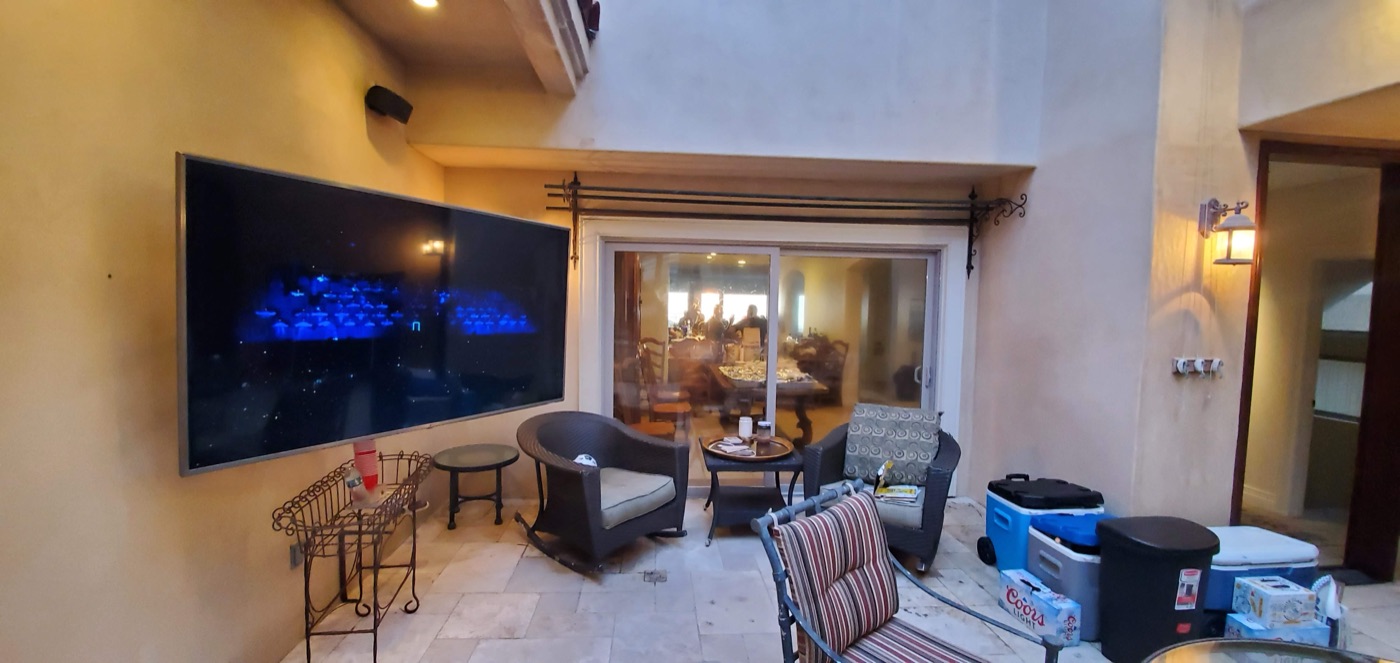
Horizontal rain is the key detail. A patio cover protects against vertical rain and does almost nothing against a monsoon gust front. So "it's under a roof" is not a weatherproofing plan by itself.
The Weatherproofing Checklist
Power
- GFCI protection on the circuit, no exceptions
- A weather-resistant receptacle with an in-use bubble cover — one that stays sealed with a plug inserted, not a flip lid that only closes when empty
- No indoor extension cords, and nothing lying where water pools
- Receptacle positioned below the TV so gravity works with you, not above it
Cabling
- UV-rated cable or cable run inside conduit — ordinary jacket embrittles fast in desert sun
- Drip loops at every device: let each cable hang below its connection point so water runs off the low point instead of tracking into the port. This is the single cheapest and most effective habit on this list.
- Weatherproof covers or boots on unused ports
- Sealant at every wall penetration, on the exterior side
Mount and hardware
- Stainless or hot-dip galvanized fasteners, so you don't get rust streaks down a light stucco wall
- Exterior sealant behind the mount plate at each fastener hole
- Fixed or tilt mounts in exposed locations — an extended full-motion arm is a sail in a 50 mph outflow gust
Sources and equipment
- Keep streaming boxes, receivers, and cable boxes indoors and run a single HDMI out, rather than putting a plastic streaming stick on a patio wall
- If gear must live outside, it belongs in a sealed, ventilated, lockable enclosure
- Outdoor speakers should be weather-rated, not indoor speakers under an eave
Seasonal habits
- A fitted dust cover during the months you're not using the patio does more good here than in almost any other climate
- Blow out vents and connector housings with compressed air a couple of times a year
- After a big dust storm, check that vents are clear before the next hot stretch
- Clean the screen with a microfiber cloth and a screen-safe cleaner — dry-wiping desert dust grinds it into the coating
Where People Actually Get Caught Out
In our experience the three most common failures are an indoor-rated extension cord run out to a patio TV, a receptacle mounted above the TV so water runs down into it, and a streaming stick left plugged in outdoors year-round. All three are cheap to avoid at install time and expensive to discover in August.
Frequently Asked Questions
When is monsoon season in Las Vegas?
Roughly mid-June through September. It brings a large share of the year's rainfall in a small number of intense afternoon storms, often with strong outflow winds that drive rain sideways — which is why a patio roof alone isn't sufficient weather protection.
Is dust really a problem for an outdoor TV?
It's arguably the biggest one. Fine desert dust insulates heat sinks so the device runs hotter, clogs cooling fans, bridges inside connectors and causes intermittent dropouts, and hazes the screen. Sealed, fanless outdoor TVs exist specifically because of this.
What's a drip loop and why does it matter?
It's letting a cable hang in a downward loop below the port it plugs into, so water running along the cable drips off the bottom of the loop instead of tracking into the connector. It costs nothing, takes seconds, and prevents a large share of outdoor AV water damage.
Should I cover my outdoor TV when I'm not using it?
In Las Vegas, yes — more for dust than for rain. A fitted cover during the months you're not out there meaningfully extends the life of the equipment.
Related Reading
Outdoor TV Installation for Las Vegas Patios · Heat, Sun and Glare on Outdoor TVs · Camera and Doorbell Placement in the Desert · TV Mounting Services