Mounting a TV in a Two-Story Great Room: Height, Heat and the Optical Illusion
Two-story great rooms are a signature of Las Vegas production housing from the 2000s onward — Southern Highlands, Anthem, Mountain's Edge, Summerlin West, Inspirada, Providence. They're dramatic rooms, and they create four specific problems for a TV install that don't exist in a standard eight- or nine-foot room.
Problem One: The Wall Lies to You
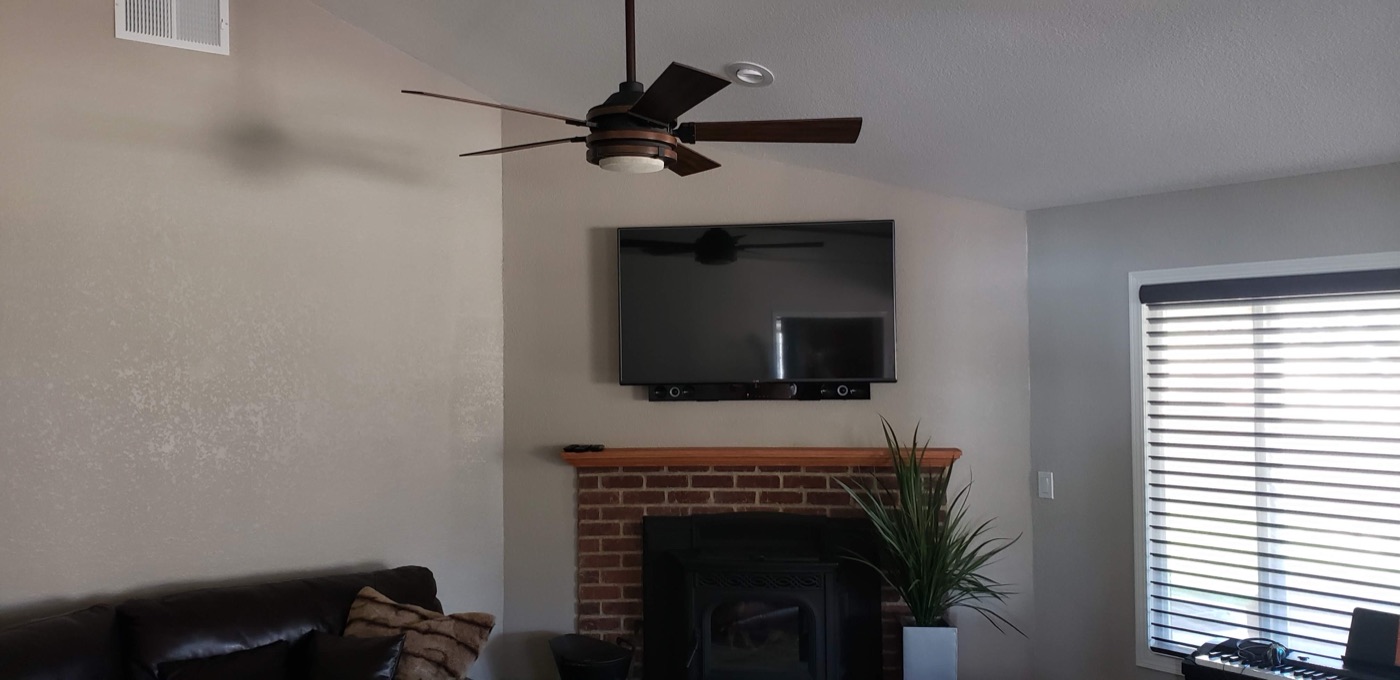
Stand in a 20-foot-tall great room, hold a TV against the wall at the correct height, and it will look wrong. Too low. Undersized. Lost against all that vertical space. Nearly everyone's instinct is to raise it — and the result is a TV that looks proportionate to the architecture and is genuinely uncomfortable to watch.
The fix is to ignore the wall and trust the measurement. Screen center at seated eye level — around 42 inches for most sofas — is correct regardless of how tall the wall is, because your neck doesn't know how tall the room is. Our height guide has the numbers by screen size.
If the visual proportion genuinely bothers you, the design answer is to fill the wall around the TV — a taller fireplace surround, a built-in, stone or tile running to the ceiling, art flanking the screen — rather than to raise the screen into it. That's a decorating decision, not a mounting one, and it's the one that actually works.
Problem Two: Heat Stratification
This one is specific to the desert and it's underappreciated. Hot air rises, and in a two-story volume during a Las Vegas summer the temperature difference between floor level and 15 feet up can be substantial — especially on a west-facing wall with clerestory windows dumping afternoon sun into the upper volume, which is an extremely common configuration here.
Consumer TVs generally specify a maximum ambient operating temperature around 104°F. A TV mounted high on that wall lives permanently in the hottest air in the house, and if the room has significant west glazing it also takes direct radiant load. It's another argument for mounting at proper viewing height rather than up the wall — the comfortable position happens to be the cooler one. If a high position is unavoidable, ceiling fans that push air down and window treatment on the upper glazing both help materially.
Problem Three: The Install Itself Is Harder
Even a correctly positioned TV on a tall wall often sits above a hearth or a raised stone base, which means ladder work over an uneven surface. Add a two-person lift for a large panel and there's no margin for improvisation. Practical implications:
- Ladder or scaffold access with a stable base, which a raised hearth complicates
- A second installer, not for the weight so much as for control at height
- Longer cable runs — a drop from a high mount to a floor outlet can be twice what a standard room needs
- Fire blocking is more likely in a tall wall, so the fish path may need an intermediate access point
- Full-height stone or tile surrounds, which are common in these rooms and need their own approach
Problem Four: These Rooms Sound Bad
A tall volume with tile or luxury vinyl floors, large glass, and minimal soft furnishing is an acoustically hostile room. Dialogue gets lost, bass disappears into the upper volume, and a TV's built-in speakers are hopeless. Three things that genuinely help:
- A soundbar with a separate subwoofer at minimum. The sub does the work the room is stealing.
- In-ceiling height speakers are often better than up-firing Atmos modules here. Up-firing speakers work by bouncing sound off a flat ceiling directly overhead — a vaulted or two-story ceiling scatters that reflection and the effect largely disappears.
- Soft surfaces. A large rug and fabric window treatment do more for intelligibility than an equipment upgrade.
More on the tradeoffs in soundbar vs. surround sound.
The Short Version
Mount at seated eye level even though the wall makes it look wrong, fill the wall around the screen instead of raising the screen, plan for a longer cable run, and budget attention for sound because the room will fight you on it.
Frequently Asked Questions
How high should a TV go in a two-story great room?
The same height as in any other room — screen center at seated eye level, around 42 inches for a typical sofa. Tall walls create a strong visual pull to mount higher, and giving in to it is the most common regret in these rooms.
Is it bad for a TV to be mounted high in a Las Vegas great room?
It can be. Hot air collects in the upper volume, and a tall room with west-facing clerestory glass can push that zone toward or past the roughly 104°F ambient limit most TVs specify. Mounting at proper viewing height keeps the TV in cooler air as a side benefit.
Do up-firing Atmos speakers work with a vaulted ceiling?
Not well. They rely on a flat ceiling directly overhead to reflect sound back down. A vault or a two-story volume scatters that reflection. In-ceiling speakers are the better answer in these rooms.
Why does my great room sound so bad?
Hard floors, large glass, tall volume, and little soft furnishing. It's an acoustics problem, not an equipment problem. A subwoofer, a large rug, and fabric window treatments make more difference than a more expensive soundbar.
Related Reading
How High Should You Mount a TV? · Soundbar vs. Surround Sound · What Drives TV Mounting Cost in Summerlin · Mounting a TV on a Tile Feature Wall